Shellfish Poisoning: Public Health Communication
Translating Technical Information into Accessible Public Education
The Question
How can public-health information be communicated clearly enough to support awareness and action?
Scientific and medical information is often highly technical, making it difficult for non-specialist audiences to identify the information most relevant to their health and safety. This project focused on translating information about shellfish poisoning into a concise, visually accessible educational resource.
My Approach
I reviewed scientific and public-health sources describing:
- Types of shellfish poisoning
- Associated toxins
- Symptoms and health risks
- Populations at increased risk
- Prevention and food-safety recommendations
The goal was to identify the information most important for public awareness and communicate it in a format that was easy to understand and quickly read.
Key Insights
Public audiences need actionable information.
Most people do not need to understand every biological mechanism behind disease. They need to know how to recognize risk, identify symptoms, and seek appropriate care.
Simplicity improves accessibility.
Effective health communication requires balancing scientific accuracy with clear, concise language.
Visual design supports learning.
Well-organized visual materials help audiences navigate information more efficiently than large blocks of text.
Skills Demonstrated
- Health Communication
- Science Communication
- Knowledge Translation
- Educational Content Development
- Research Synthesis
- Visual Information Design
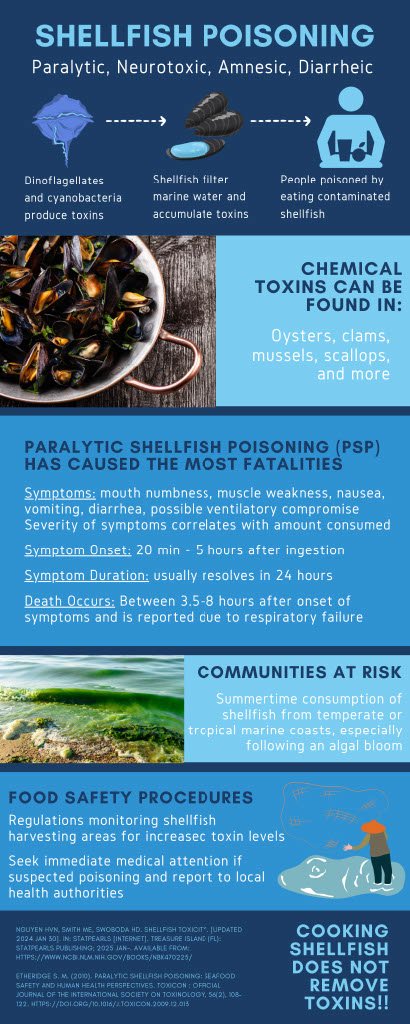
Deliverable: Research Public Health Education Infographic
Looking for something similar?
I help organizations:
- Conduct literature reviews
- Synthesize research
- Gather stakeholder perspectives
- Translate complex topics for wider audiences
- Tell meaningful stories about their work and impact