I traveled to Japan a few years ago and visited the famous Tokyo teamLab Planets museum. It is an incredible, immersive experience of art, and is often used as a great photo opportunity. I am not someone who uses social media to its fullest, but I hoped to capture some worthy shots there.
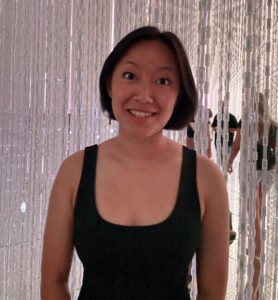
I don’t have a great eye for quality photos, but I could confidently say that this one (above) was not it. It’s a somewhat unhinged, mid-sentence moment that I probably planned to delete. I certainly did not anticipate posting this for the world to see, and yet here I am sharing it with you all.
Truthfully, the expectation of perfection I see on social media is one of the reasons I have never fully embraced those platforms. I never quite felt good enough to own that space and did not prioritize engaging online to learn how to be good enough.
However, I recently started noticing a shift in the content the algorithm has been showing me. I am seeing more creators reveal their humanity. I see women expressing pride in their real bodies, rather than idealized versions of themselves, and more people openly sharing stories of failure rather than carefully curated success. Of course, these moments are still presented through a curated lens, but they feel more relatable and more empowering, nonetheless.
The trend inspired me to consider why these posts resonate so strongly. None of them are perfect. In fact, their imperfections seem to be the very thing that make them memorable.
I also recently heard an interesting story about writers intentionally leaving grammatical errors and typos in published work to signal that AI did not write the piece. Whether or not this becomes a lasting practice, I found the idea fascinating. As artificial intelligence becomes increasingly capable of producing polished content, perfection begins to feel less human and less trustworthy. Visible flaws serve as reminders of the person behind the presentation and imperfection has become a signal of authenticity.
I increasingly believe that authenticity matters because it helps us see one another more clearly. Flaws make people easier to relate to. Relatability allows us to see someone as a complete person rather than a polished image. And when we see whole people, it becomes easier to care about them.
This may sound simple, but it feels increasingly important in a world where so much of our interaction happens through screens. People are more accessible than ever, and yet distance seems to keep growing. We can know endless details about one another while still feeling surprisingly disconnected.
Part of the challenge is that we aren’t built for knowing this many people. We do not have the emotional bandwidth or brain capacity to care deeply for billions of complex individuals, so we naturally rely on categories, labels, and assumptions to understand our environment. These shortcuts help us navigate the world, but they can also create distance.
I continue to contemplate how I can expand my own capacity for caring. While I may never overcome the limits of my attention completely, I like to think it is possible to expand our capacity to see and understand others.
One way might be to allow our own imperfections to remain visible. I acknowledge that I expend too much energy trying to edit out my own imperfections and minor embarrassments, and I also know that I am not alone in this. Releasing my own pressure to be flawless unlocks my capacity to consider others more fully. It becomes easier to extend that same grace to other people and gives them permission to be human too.
Allowing others to see our imperfections is not simply an act of vulnerability, it is truly an act of generosity. Imperfect glimpses help us see individuals instead of abstractions. They remind us that everyone is navigating their own uncertainties, insecurities, and unfinished stories. In doing so, they make connection and compassion a little easier. In a world that often rewards polished images, this kind of visible humanity may be more valuable than ever.
I am not going to pretend that sharing this “bad” photo publicly is comfortable for me. Part of me still wants to delete it. But maybe this photograph, which I nearly discarded, says something real. Maybe it captures a small piece of humanity that a perfectly staged image could not. And maybe that is the value of imperfection. Not that it makes us more interesting or impressive, but that it makes us more recognizable to one another.